Special projects, 29 June 2018
“HINC FELIX ILLA CAMPANIA EST” interpreted by Chekos’art, GRAArt Rome

“HINC FELIX ILLA CAMPANIA EST”
Chekos’art and his contribution to the project GRAART, a project of Urban Contemporary Art that retraces the history and myth of Rome through urban art works painted by artists from different parts of the world on the walls of the Grande Raccordo Anulare ring road.
The closeness to the road linking Rome and Naples invites us to tell the ancient bond between these two territories. What for the Romans was Campania Felix, as Pliny the Elder defined it, is the historical theme inspiring a story of an emotional as well as territorial bond between a part of Campania and the City of Rome, a bond dramatically broken in 79 AD by the eruption of Vesuvius and the destruction of Pompeii, Herculaneum and other places in the area.
Pliny himself died that day. We know it thanks to his nephew, Pliny the Younger, who in letters to the historian Tacitus describes the tragic circumstances of his uncle’s death and at the same time becomes the chronicler of the disaster that wiped out a vital part of Rome, even though far from the capital.
Exploring this relationship between Rome and “its” Campania Felix necessarily takes us into the imperial courts as well, and in particular into a story that ended in the 1st century in a patrician villa in Baiae (Campania): the murder of Agrippina the Younger by her son Nero.
The life of the last emperor of the Julio-Claudian dynasty and his companions is the starting point to tell a whole system of values, its merits and vices, but also the great culture of these circles and their geography which, at least in the 1st century, favoured the relaxing landscapes of Campania. The journey therefore naturally leads back to Rome, before what remains of the Domus Aurea. And so also before the Flavian Amphitheatre (the Colosseum), built to erase the memory of Nero.
But a story of the many shadows and countless lights of court life cannot avoid a subject crucial to settling many political debates of the Eternal City: poison. Ever present companion of the nobles of those times, it was a faithful ally of both Augusta Agrippina and her son Nero. Both used the services of Locusta of Gaul, the official poisoner of the imperial court, who kept her workshop on the Palatine until power passed to Emperor Galba, who sentenced her to death in a very bloody public event whose brutality went down in history. (text by David Diavù Vecchiato)
*read more click here


Discover more: Urban regeneration through art · Participatory art
More projects
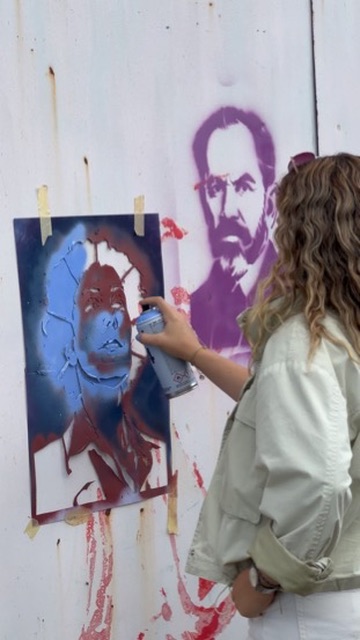
WALL IN ACTION: Art, Climate Awareness and Youth Participation Come Together in Kielce
Kielce, Poland | 21-25 August 2026 WALL, Kielce 2026 From 21 to 25 August 2026, WALL, Working…
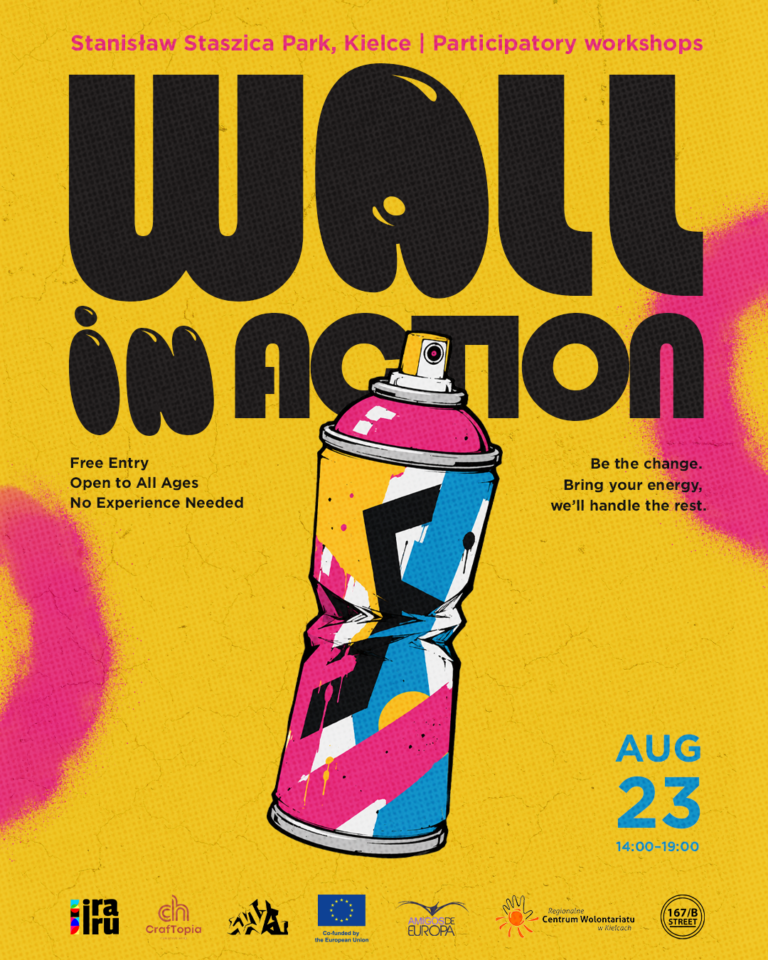
WALL: Working with Art to Lead and Learn
WALL, Working with Art to Lead and LearnA European project using art and music to educate, include…

Gallipoli Art District 2024
167B Street alongside “Oh My Gad, Gallipoli Art District” “Oh My Gad, Gallipoli Art District” takes…